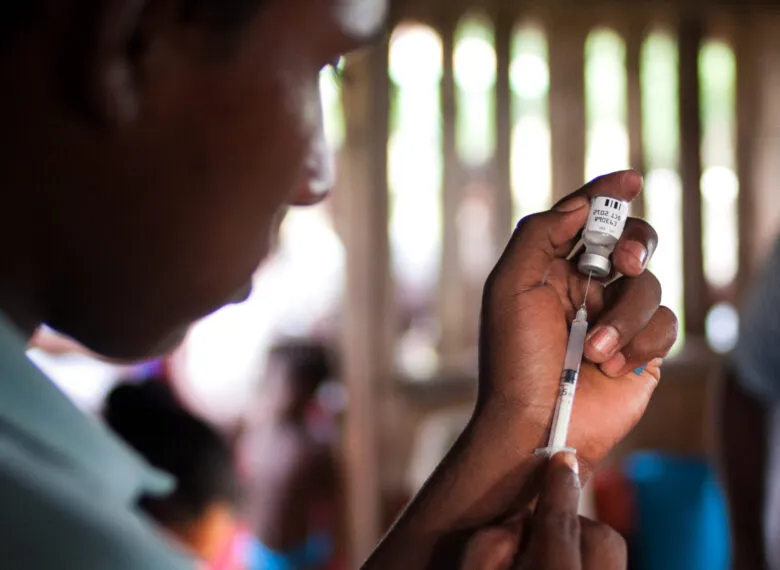
While the United States was once the world’s largest donor to global health initiatives, the Trump administration’s new America First Global Health Strategy moves away from long-term funding for programs addressing HIV, tuberculosis, malaria and polio and instead expects partner countries to take on more of the financial burden. As a result, countries may face widening gaps in essential services and financing. In a recent article in Think Global Health, Dr. Allyala K. Nandakumar, director of the Global Social Work & Public Health Lab at the Center for Innovation in Social Work and Health (CISWH) at Boston University School of Social Work (BUSSW), and Debbie Stenoien, CISWH research associate, explore the implications of this policy shift.
While the impacts of this new strategy are still emerging, CISWH researchers examined the potential risks of significant cuts to global health spending, while exploring potential new strategies for frontline and nonfrontline services in the wake of waning United States support.
Excerpt from “Questions for the America First Global Health Strategy” by Jennifer Kates, Debbie Stenoien, Michael Ruffner, and Allyala Nandakumar:
The America First Global Health Strategy marks a significant shift in U.S. engagement. Although it emphasizes country self-reliance and bilateral agreements, it raises important questions about service continuity, financing, and access. How these changes are implemented will influence not only the trajectory of U.S. support but also the ability of partner countries and the broader global community to sustain progress against HIV, TB, malaria, polio, and emerging health threats. Careful attention to the issues outlined above could help mitigate risks, preserve gains in global health, and support a smoother transition to new models of cooperation.
Related News

Stay in the Know
Get the latest news on research, policy, and practice in social work and health right in your inbox. Subscribe to stay in the know.