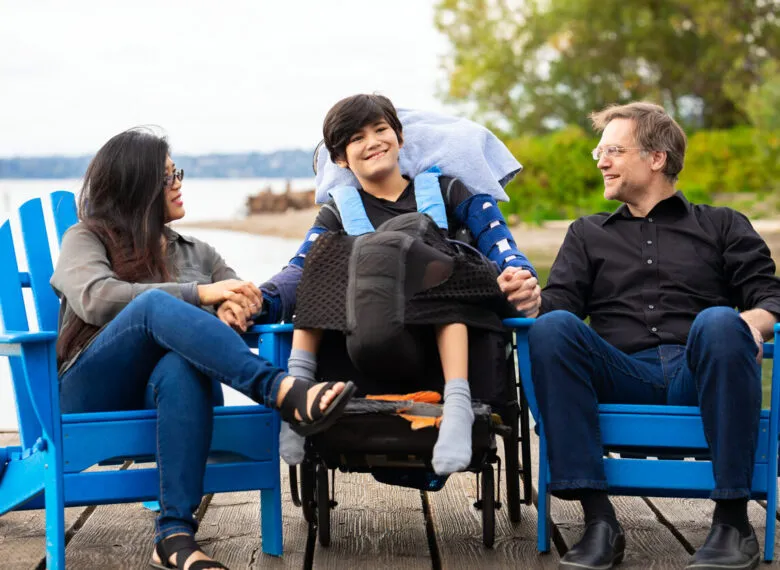
Under the current One Big Beautiful Bill Act, each state is required to implement new work requirements for certain Medicaid enrollees. Many family caregivers are unable to work while providing needed care for their children’s medical needs. As Medicaid eligibility requirements continue to evolve, many family caregivers have serious questions and concerns about how they might be impacted by these new work requirements.
Experts on Medicaid policy for children with disabilities at the Center for Innovation in Social Work and Health (CISWH) at BU School of Social Work (BUSSW) developed a flow chart that helps Title V CYSHCN programs and family leadership organizations identify who is eligible for caregiver exemptions from the pending Medicaid work requirements.
Created as part of the American Academy of Pediatrics’ National Center for a System of Services for Children and Youth with Special Health Care Needs (CYSHCN), CISWH’s new flow chart was designed to help maternal and child health program staff and family leaders provide more effective benefits counseling to families and better partner with their state Medicaid programs.
The flow chart was developed by CISWH Senior Project Directors Meg Comeau, Bethlyn Vergo Houlihan, and Allyson Baughman; and Caroline Parker, CISWH program manager.
“This is an excellent tool for public health agency staff, social workers and family leadership organizations who provide benefits counseling and financial resource information to their clients,” said Comeau. “There’s great potential here to partner with your State Medicaid program in establishing an expansive definition of people with disabilities and medical frailty, and to ensure the needs of family caregivers of children with disabilities are represented as policies and procedures are established.”
Funding Acknowledgement
The National Center for a System of Services for CYSHCN is supported by the Health Resources and Services Administration (HRSA) of the U.S. Department of Health and Human Services (HHS) as part of an award totaling $1,500,000 with no funding from nongovernmental sources. The information or content are those of the author(s) and do not necessarily represent the official views of, nor an endorsement, by HRSA, HHS or the U.S. Government.
Related News


Stay in the Know
Get the latest news on research, policy, and practice in social work and health right in your inbox. Subscribe to stay in the know.