
As a graduate fellow at the Center for Innovation in Social Work and Health (CISWH) at BU School of Social Work (BUSSW), I’ve learned that social work extends far beyond the classroom and the clinic. It lives in policymaking, legislative offices, and the systems that shape people’s everyday lives. This became real for me during Student Advocacy Day in Washington, D.C., where I had the opportunity to practice advocacy firsthand. Hosted by the Congressional Research Institute for Social Work and Policy (CRISP), which is led by CISWH board member Dr. Charles Lewis, the day brought together social work students from across the country to engage directly with federal policymakers. It was one thing to learn about policy in class, but it was another to sit across from congressional staff and recognize that social workers have a responsibility to actively shape policy, not just respond to it.
The Overview
During this event, I engaged in social work policy and advocacy across multiple levels; learning how policy ideas originate through a presentation on Child Development Accounts, visiting the National Association of Social Workers (NASW) headquarters to understand how a national organization operates, and participating in Student Advocacy Day in Washington, D.C., where I lobbied congressional staff and observed the Senate in session. Together, these experiences deepened my understanding of how social workers can influence systems and policy.

Advocating for Policy Change

During Student Advocacy Day, students were invited to meetings with U.S. Senate staff to advocate about important issues related to the social work profession. I joined a group of MSW students to meet with staff from Elizabeth Warren’s office. We were there to advocate for several key bills, including protections against restrictive voting policies, recognition of social work as a professional degree, and efforts to integrate social workers into the healthcare workforce. Rather than focusing only on the technical details of each bill, I leaned into storytelling. I shared examples from my own experiences to help illustrate why these policies matter. I compared roles in a healthcare setting: doctors focus on medical treatment, physical therapists support recovery, but social workers ensure patients and families have access to resources, emotional support, and the systems they need to actually heal. That moment reminded me that advocacy isn’t just about policy language—it’s about making those policies human.
This experience felt like a turning point for me. Earlier in my advocacy journey, I often felt nervous and unsure of what to say. This time, I felt more confident in my ability to communicate, to connect, and to contribute meaningfully, even walking into a meeting that had already started. I noticed that I was able to trust my instincts, speak up, and engage in a way that aligned with my strengths: relationship-building, warmth, and making complex ideas accessible. It felt like a reflection of how much I’ve grown in my ability to show up in these spaces. The staff member we met shared that Senator Warren’s priorities often align with the issues we were advocating for and encouraged us to stay in touch. That reinforced my conviction that advocacy is not a one-time interaction. It’s about building ongoing relationships.
Stepping Further into Advocacy

After the meeting, my friend and I decided to take a chance. Since we were already in the building, we walked into Senator Ed Markey’s office without an appointment, simply hoping to connect as constituents. Although no one was available to meet with us, we were offered access to the Senate Gallery at the United States Capitol, something I had never experienced before. We were escorted through underground tunnels and even took a small train under Capitol Hill. Before entering, we had to leave all of our belongings behind—phones, bags, even watches—and were instructed to remain completely silent and not express any reactions while observing the Senate in action. Inside the gallery, the space was expansive, ornate, and deeply formal. Although there wasn’t an active debate happening, senators and staff moved throughout, carrying out their work. Sitting there, I felt the weight of the decisions that are made in that room, and how many people and systems it takes just to keep it running.
While I was grateful for the access we had that day, the experience also made me think about how inaccessible these spaces can feel. Technically, we were able to walk into Senate offices, speak with staff, and observe the legislative process, but it didn’t necessarily feel accessible. There are so many unspoken rules, layers of security, and expectations that can make advocacy on Capitol Hill feel intimidating, especially for people who don’t already know how to navigate its complexities. It made me reflect on how knowledge itself can be a barrier. Knowing how to show up, who to talk to, and what to say is not something that is widely taught, yet it shapes who gets to participate in these systems. As social workers, our role is not only to advocate within these spaces, but also to help others feel empowered to enter them.

Looking Ahead
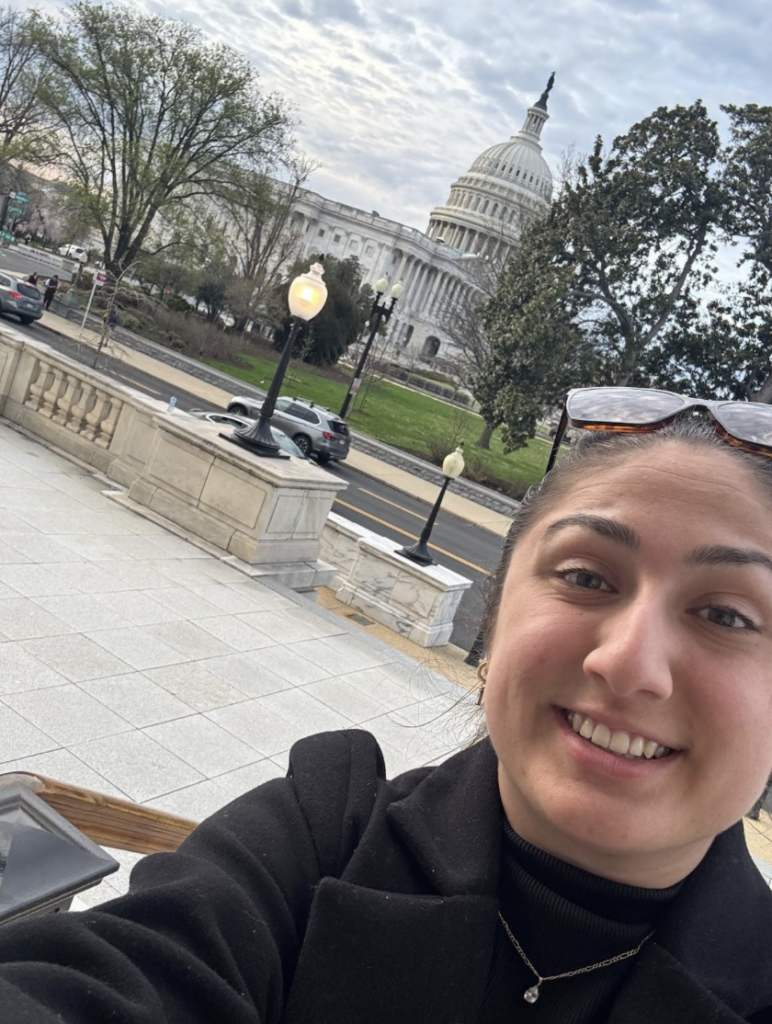
This experience deepened my commitment to policy and advocacy work. Being in those rooms, speaking with staff, observing the Senate, and navigating these systems made everything feel more tangible. It reminded me that social workers belong in these spaces—not just as observers, but as advocates, storytellers, and leaders helping to shape the systems that impact the communities we serve. For me, it reinforced that advocacy is not just about representing myself or my organization; it’s about showing up with purpose and ensuring that the voices and experiences that too often go unheard are part of the conversation.
Related News


Stay in the Know
Get the latest news on research, policy, and practice in social work and health right in your inbox. Subscribe to stay in the know.